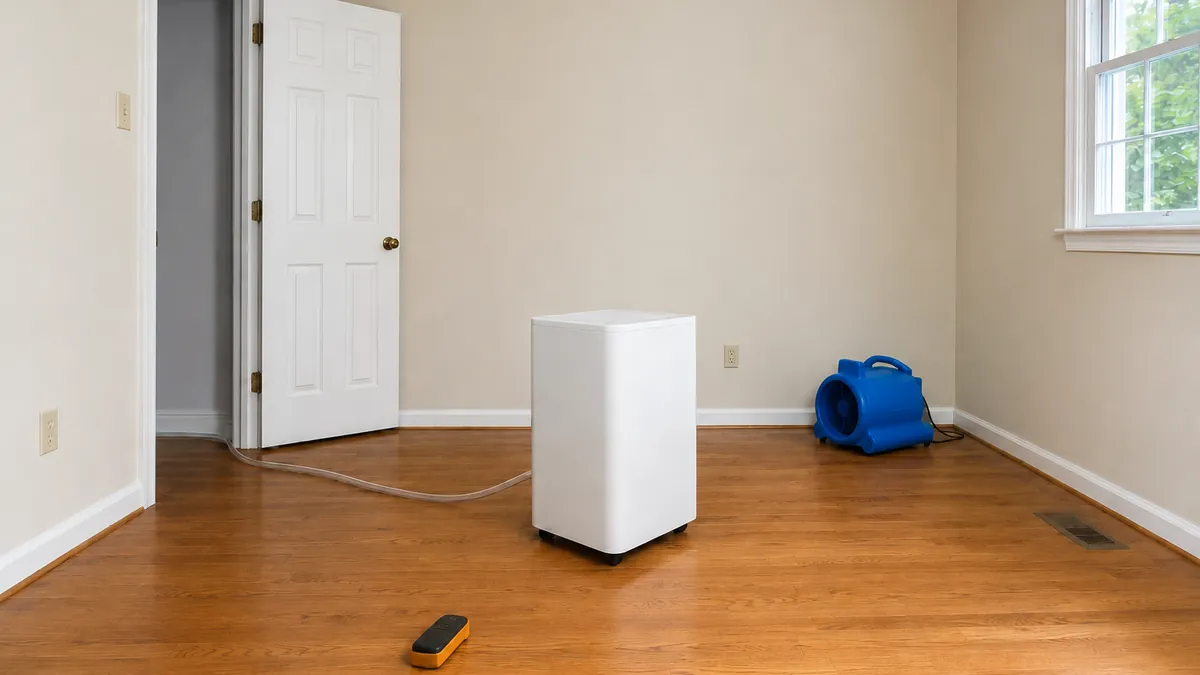
Structural drying in Marietta deals with moisture that has moved into drywall, subfloor, insulation and framing. Those materials hold water long after the floor looks dry, and Georgia summer humidity makes them slower to release it.
Drying follows water extraction. Standing water is dealt with first. Structural drying may then use air movers, dehumidifiers and other drying methods, depending on what remains wet.
Why open windows are not enough here
Georgia summer air is humid, so opening windows helps only when the outside air is drier than the air indoors. On humid days that air may be no drier than the air inside.
Dehumidifiers pull moisture out of the air so wet materials can release theirs. Air movers keep air moving across surfaces so that exchange keeps happening.
Dry, and dry to the touch
Moisture meters can show whether material that feels dry is still holding water. Readings can also be compared with unaffected material nearby.
This matters most where the wet part is out of sight. A wet crawl space under the house or the cavity behind a baseboard can stay damp out of sight while the room above feels normal.
Wet materials that are not drying? Call now to book a visit in Marietta or Cobb County.
(770) 637-1843What happens if materials are left to dry alone
Wet materials may dry without further trouble, but moisture can also stay trapped inside a wall or under flooring where it is hard to see. Odor, staining or other problems may show up later.
EPA guidance says water-damaged areas and materials should be dried within 24 to 48 hours to help prevent mold growth. That is not a guarantee, but it is why mold removal in Marietta and drying are so closely linked.
Carpet, hardwood and what sits underneath
Carpet and pad hold a great deal of water and sit directly on subfloor. Hardwood can cup or lift as it takes on moisture and then move again as it dries.
Where the two meet along a hallway, the transition strip is where water can cross from one to the other, so the dry-looking room next door is worth checking too. It shows up in basement water at floor level, where carpet meets a stair edge or a doorway.
Questions people ask
Why does drying take equipment? Can I not just open windows?
Georgia summer air is humid, so opening windows helps only when the outside air is drier than the air indoors. Dehumidifiers pull moisture out of the air so wet materials can release theirs.
How does anyone know when it is actually dry?
Moisture meters can show whether material that feels dry is still holding moisture. Readings can also be compared with unaffected material nearby.
What happens if wet materials are left to dry on their own?
Wet materials may dry without further trouble, but moisture can also stay trapped inside a wall or under flooring where it is hard to see. Odor, staining or other problems may show up later.
More on water damage in Marietta
Burst PipeFailed supply lines and what to shut off Areas covered